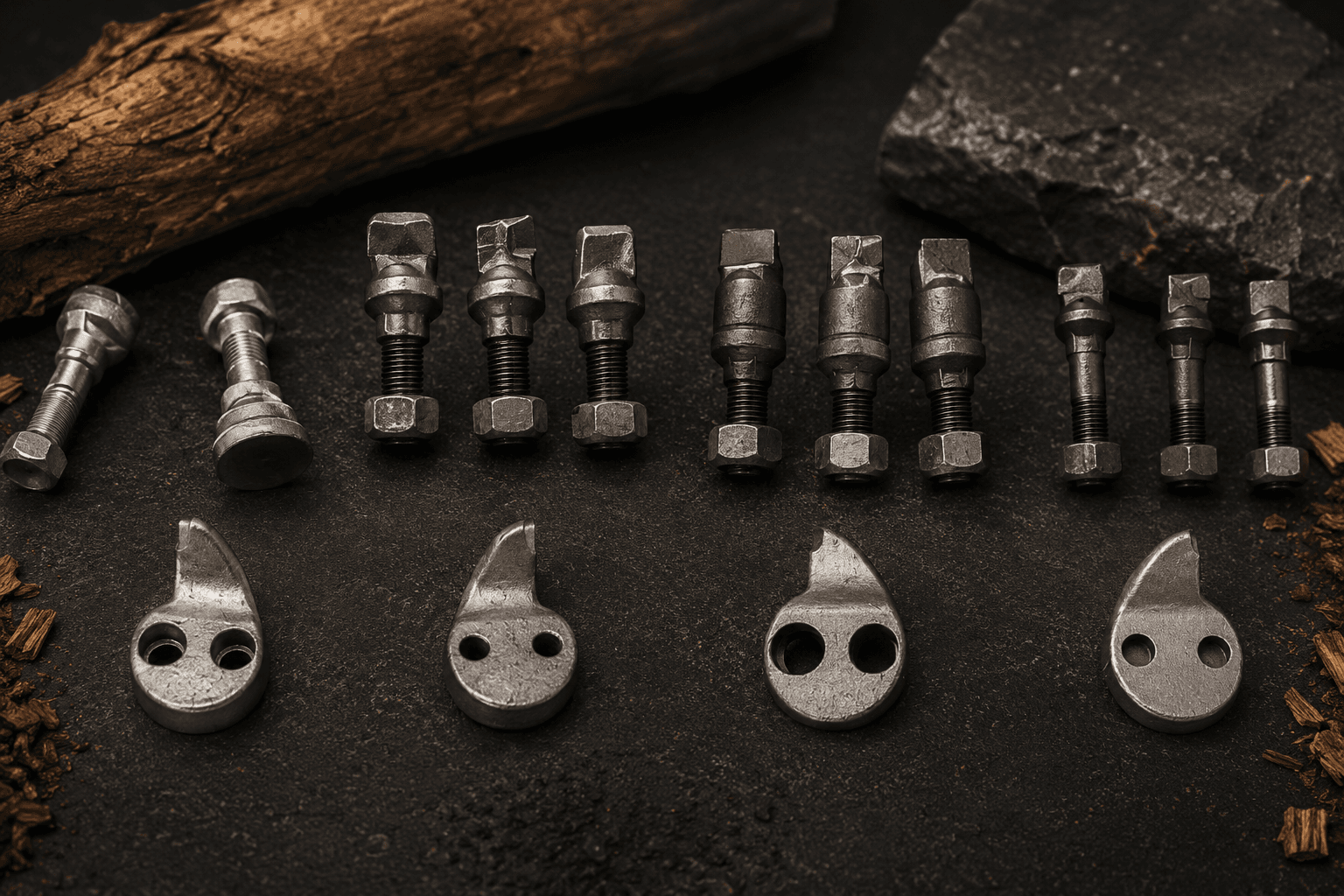
In the stump grinding industry, performance is often measured in minutes.
A contractor pulls onto a property early in the morning with a full schedule ahead: multiple removals, tight deadlines, demanding soil conditions, and customers expecting clean, fast results. The machine matters, of course. Operator experience matters too. But somewhere between the first pass and the final cleanup, another factor quietly determines how efficient, profitable, and reliable the day will actually be.
The teeth.
When stump grinder teeth wear down too quickly, productivity slows almost immediately. Cuts become less efficient. Machines work harder. Fuel consumption increases. Operators spend more time stopping to inspect, rotate, or replace components instead of moving through jobs. In difficult environments—rocky soil, hardwood stumps, buried debris, or inconsistent terrain—low-quality teeth can turn a routine project into an expensive operational bottleneck.
That’s why premium carbide stump grinder teeth are not simply consumable parts; they are engineered performance components designed to withstand extreme stress, maintain cutting precision, and maximize uptime under real-world conditions.
Across industries ranging from mining to heavy construction, carbide technology has become essential for applications where heat, impact resistance, and wear performance determine operational success. Tungsten carbide is widely recognized for its exceptional hardness and wear resistance in industrial cutting applications. According to engineering research on cemented carbides published through ASM-related materials resources, tungsten carbide composites are extensively used in heavy-duty tooling because they maintain cutting performance under high heat, abrasion, and repeated mechanical stress.
For stump grinding professionals, that difference becomes visible fast.
Why Carbide Matters in Stump Grinding
At first glance, many stump grinder teeth look similar. Most feature a steel body with a carbide tip attached to the cutting surface. But the similarities often end there.
The real difference lies in the quality of the carbide itself, the manufacturing precision behind the tooth design, and the engineering decisions that determine how the tooth behaves under constant impact.
Tungsten carbide is valued because it combines extreme hardness with compressive strength. On the Mohs hardness scale, tungsten carbide ranks close to diamond, making it highly resistant to abrasion and wear.
But hardness alone is not enough.
In stump grinding, teeth are exposed to violent and repeated impacts against roots, rocks, compacted soil, hidden metal, and inconsistent organic material. A carbide tip that is too brittle may chip or fracture. A tooth body with poor structural balance may distribute stress unevenly, accelerating fatigue and failure.
This is where premium stump grinder technology separates itself from commodity manufacturing.
High-performance carbide teeth are engineered as complete systems. Every angle, edge profile, carbide grade, brazing method, and heat-treatment process influences the final outcome. The goal is not simply to create a hard tooth. The goal is to create a tooth that remains stable, sharp, and reliable under sustained operational pressure.
That distinction has major implications for contractors managing equipment costs and downtime.
Research from the National Institute of Standards and Technology consistently highlights how tooling quality and material precision directly affect industrial efficiency, maintenance cycles, and operational productivity. In heavy equipment applications, even small improvements in wear resistance can produce significant gains in uptime and cost control over time.
In stump grinding, those gains are felt every day in the field.
The Science Behind Premium Carbide Teeth
Premium carbide stump grinder teeth begin with material selection.
Not all carbide formulations are identical. Manufacturers use different grain structures, cobalt binders, density ratios, and sintering methods depending on the intended application. Fine-grain carbide structures, for example, often provide improved wear resistance and edge retention, while other formulations prioritize toughness and fracture resistance.
The balance matters.
A tooth operating in sandy soil conditions experiences different wear patterns than one grinding dense hardwood stumps in rocky terrain. Premium manufacturers design carbide formulations specifically around these environmental stresses instead of relying on generic industrial carbide inserts.
The steel body itself is equally important.
Lower-grade manufacturing frequently relies on inconsistent casting tolerances or weaker steel compositions that can deform under stress. Premium stump grinder teeth instead use carefully machined steel bodies designed to absorb impact while maintaining structural integrity around the carbide tip.
This relationship between carbide hardness and steel flexibility is critical. If the body flexes too much, the carbide can crack. If the body is too rigid, impact forces transfer directly into the tip. Engineering the correct balance improves both durability and cutting consistency.
The brazing process also plays a major role.
Carbide tips are typically attached to the steel tooth body using high-temperature brazing alloys. Poor-quality brazing can create weak bonding points that fail under vibration or thermal stress. Premium manufacturing processes use controlled heating environments and precision bonding techniques to ensure stronger adhesion and longer operational life.
In many cases, the difference is invisible until the tooth enters the field.
A lower-cost tooth may appear functional during initial use but deteriorate rapidly under sustained grinding conditions. Premium teeth are engineered specifically to maintain edge stability over hundreds of impacts per minute, reducing operator interruptions and preserving cutting efficiency longer.
Manufacturing Precision Changes Performance
The way stump grinder teeth are manufactured directly affects how they perform under pressure.
Mass-market production often prioritizes speed and cost reduction over precision. Variations in carbide placement, inconsistent balancing, or poor machining tolerances can create uneven wear patterns that shorten lifespan and reduce grinding efficiency.
Premium manufacturing takes a different approach.
Modern CNC machining technologies allow manufacturers to maintain far tighter tolerances across every tooth produced. This consistency improves rotational balance, reduces vibration, and ensures more predictable cutting performance across the full wheel assembly.
The benefits extend beyond durability.
A balanced, properly engineered tooth reduces unnecessary strain on the grinder itself. Less vibration means lower stress on bearings, wheel assemblies, hydraulic systems, and operator controls. Over time, these improvements contribute to lower maintenance costs and smoother machine operation.
Industrial manufacturing research published by organizations like the Society of Manufacturing Engineers has repeatedly demonstrated how machining precision and tooling consistency improve both equipment longevity and operational productivity across heavy-duty applications.
For stump grinding professionals, that translates directly into profitability.
Every avoided replacement, every uninterrupted grinding cycle, and every completed job contributes to operational efficiency.
Testing, Quality Control & Real-World Validation
Premium stump grinder technology is not developed in theory alone.
The best manufacturers continuously test products in real operational environments to evaluate wear resistance, fracture performance, heat tolerance, and cutting consistency across different stump types and soil conditions.
This testing process is essential because stump grinding environments are unpredictable by nature.
Hidden rocks, buried fencing, compacted roots, moisture variation, and debris all create dynamic impact conditions that cannot be fully replicated in laboratory settings alone. Real-world testing allows manufacturers to refine tooth geometry, carbide positioning, and structural reinforcement based on actual field performance.
Quality control becomes equally important.
Premium carbide teeth typically undergo inspection processes that verify carbide integrity, brazing quality, dimensional consistency, and material composition before products reach customers. Even minor inconsistencies can significantly affect durability once a tooth enters heavy-use environments.
This commitment to engineering discipline is what separates professional-grade stump grinder teeth from generic aftermarket alternatives.
Contractors may initially compare products based on purchase price alone. But experienced operators understand that the true cost of stump grinder teeth includes downtime, replacement frequency, productivity loss, machine wear, and job completion speed.
A cheaper tooth that wears out prematurely often becomes far more expensive over time.
Why the Industry Is Moving Toward Premium Technology
The stump grinding industry itself is changing.
Customers increasingly expect faster turnaround times, cleaner results, and reliable scheduling. Contractors are balancing labor shortages, fuel costs, machine investments, and tighter operating margins. Equipment uptime matters more than ever.
In that environment, tooling quality becomes a competitive advantage.
Premium carbide stump grinder teeth help operators maintain cutting performance longer, reduce interruptions, and improve overall operational consistency. Instead of constantly reacting to wear and failures, contractors can focus on completing jobs efficiently and scaling their business more effectively.
That shift mirrors broader industrial trends.
According to McKinsey & Company research on digital maintenance and reliability, asset-intensive industries are increasingly investing in technologies and operational strategies designed to improve equipment reliability, reduce unplanned downtime, and increase long-term operational efficiency.
Stump grinding is no different.
As operational expectations rise, the market continues moving toward engineered solutions designed for long-term reliability instead of short-term cost savings.
The Difference Is Built Into the Tooth
The performance gap between standard and premium stump grinder teeth rarely reveals itself on a product page.
It reveals itself after hours of grinding through dense hardwood. It reveals itself when operators finish more jobs without changing teeth. It reveals itself when machines run smoother, crews stay productive, and downtime stays low during demanding workloads.
That difference is not accidental.
It comes from material science, engineering precision, manufacturing discipline, and continuous testing designed around real operational challenges.
At StumpTeeth, premium carbide technology is not treated as a marketing term. It is built directly into the manufacturing process, the material selection, and the performance philosophy behind every tooth produced.
Because in professional stump grinding, durability is not simply about surviving impact.
It is about maintaining performance when conditions become difficult.
If your operation is ready to reduce downtime, improve cutting efficiency, and invest in premium stump grinder technology designed for real-world performance, explore the complete product line.
Call us directly at (512) 500-0075 or contact us online and discover why professionals across the U.S. are choosing carbide built for real-world conditions.
Browse our products today.
Fast delivery is guaranteed: orders placed by 2 pm CT ship the same day, with next-day options available.