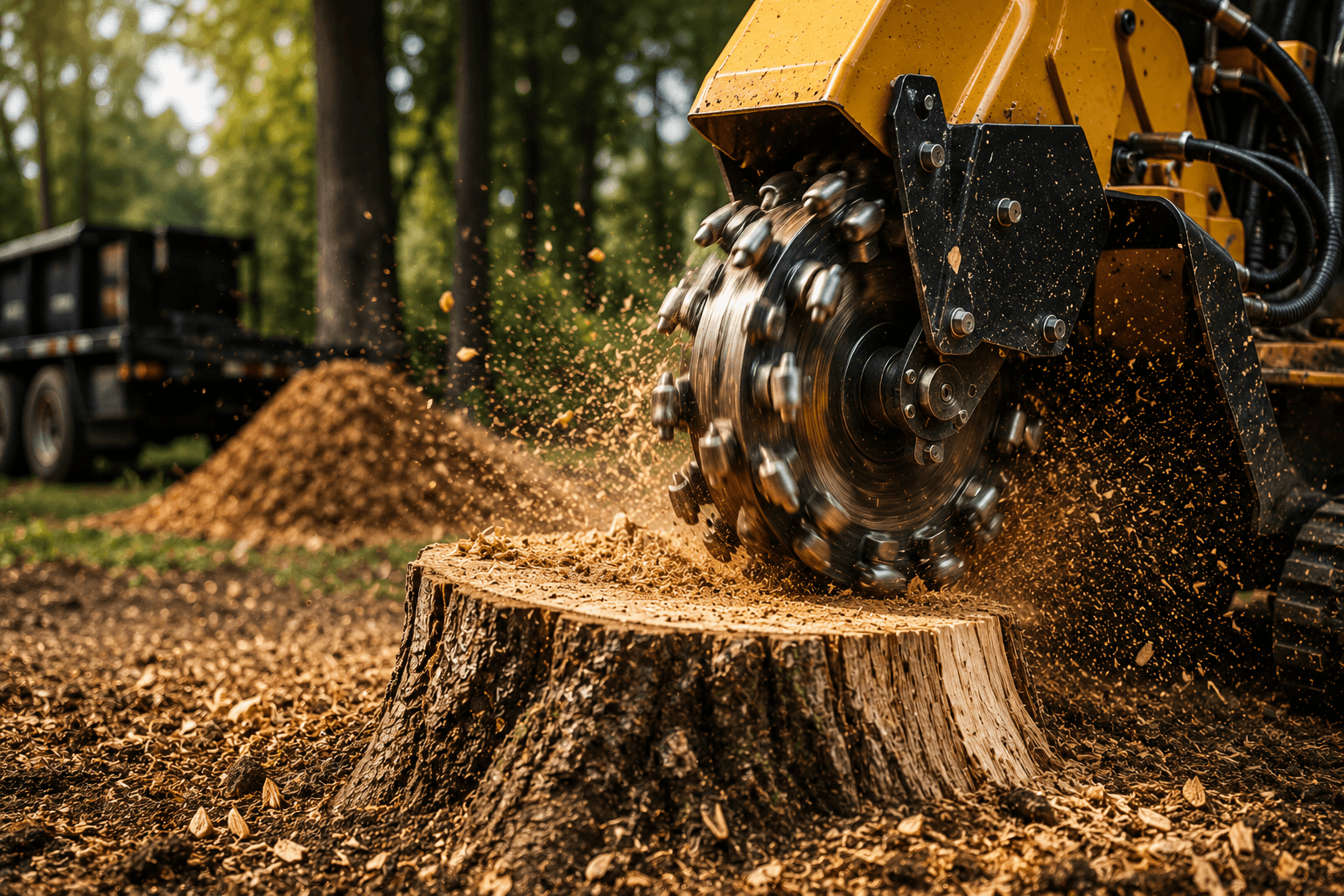
Every experienced stump grinder operator has encountered it.
Two jobs that appear nearly identical can produce completely different results. One stump disappears quickly, leaving behind clean wood chips and satisfied customers. The next takes far longer than expected, consumes more fuel, and puts unnecessary stress on both the machine and its cutting teeth.
Many assume the difference comes down to horsepower. In reality, the biggest gains in productivity usually come from something far less expensive: improving grinding efficiency.
Professional operators understand that maximizing efficiency is about creating the right balance between machine setup, cutting technique, equipment maintenance, and high-quality replacement teeth. Small adjustments made consistently throughout the day can translate into faster job completion, lower operating costs, and longer equipment life.
Whether you’re running a compact stump grinder for residential jobs or a larger machine on commercial projects, these field-tested practices can help you get more production from every hour on the jobsite.
Efficient Grinding Begins Before the First Cut
The most productive operators know that efficiency starts well before the cutter wheel contacts the stump.
A quick site inspection often reveals obstacles that can dramatically affect performance. Rocks, exposed roots, buried wire, irrigation components, and hidden metal objects can damage carbide teeth within seconds. Spending a few minutes preparing the work area reduces the likelihood of costly downtime and unexpected repairs.
Machine positioning also plays a critical role. Instead of constantly repositioning during the grinding process, experienced operators choose an angle that allows smooth, continuous side-to-side movement while maintaining consistent contact with the stump.
This approach reduces unnecessary movement, improves cutting consistency, and allows operators to maintain a steady workflow from start to finish.
Sharp Teeth Are One of the Best Productivity Investments You Can Make
Many operators try to maximize the life of their cutting teeth by using them until they’re completely worn out.
Unfortunately, this often has the opposite effect.
As carbide edges lose their sharpness, they stop cutting efficiently and begin rubbing against the wood. The machine works harder, engine load increases, fuel consumption rises, and vibration becomes more noticeable. Operators naturally compensate by applying additional pressure, which places even greater stress on bearings, belts, pockets, and hydraulic components.
Modern cutter tooth technology has evolved specifically to address these challenges. Improvements in carbide design, retention systems, and cutter geometry help maintain cutting performance while extending service life. Vermeer highlights how advances in cutter technology can improve cutting efficiency while reducing wear on both the machine and its components.
Replacing worn teeth before they become ineffective allows the cutter wheel to remove more material with less effort, ultimately reducing both operating costs and job completion times.
Let the Machine Do the Work
One of the most common mistakes in stump grinding is trying to remove too much material during each pass.
When operators aggressively force the cutter wheel into the stump, engine RPM begins to fall. Instead of increasing production, cutting performance decreases as the machine struggles to recover.
Professional operators develop a steady rhythm instead.
They allow the cutter wheel to maintain speed while making controlled passes across the stump surface. Although each cut removes slightly less material, the machine maintains optimal cutting speed throughout the process, often completing the job more quickly overall.
Listening to the engine becomes an important part of this process. Experienced operators constantly adjust feed pressure based on engine load, wood density, and chip production rather than relying on brute force.
The result is smoother operation, reduced wear, and consistently higher productivity.
Finding the Right Balance Between Power, Pressure & Feed Rate
Grinding efficiency depends on balance rather than maximum power.
Every stump grinder operates most effectively when horsepower, cutter wheel speed, and feed rate work together.
Feeding too aggressively into dense hardwood overwhelms the cutter wheel and slows production. Feeding too lightly leaves available horsepower unused and unnecessarily extends the job.
Experienced operators continually adapt their technique based on changing conditions.
Fresh hardwood behaves differently than old, weathered stumps. Moisture content, tree species, root flare, and even soil composition influence how quickly wood can be removed.
Rather than applying the same approach to every stump, professionals make constant adjustments that keep the cutter wheel operating within its most efficient range.
These subtle changes often separate highly productive operators from average ones.
Small Maintenance Habits Have a Big Impact on Performance
Many productivity issues are not caused by aging equipment—they’re caused by neglected maintenance.
Dirty air filters restrict engine airflow.
Loose drive belts reduce power transfer.
Improperly torqued teeth create vibration.
Hydraulic systems that aren’t maintained lose efficiency over time.
Even allowing wood chips to accumulate around cooling components can reduce machine performance during long workdays.
Preventive maintenance isn’t simply about avoiding repairs; it’s about maintaining consistent production throughout the entire season.
The Occupational Safety and Health Administration (OSHA) also emphasizes that regular equipment inspection and preventive maintenance help reduce mechanical failures and improve operator safety.
A few minutes spent inspecting the machine before each job can prevent hours of costly downtime later.
The Small Mistakes That Quietly Reduce Grinding Efficiency
Some of the biggest productivity losses come from habits that develop over time.
Running partially worn teeth alongside new ones creates uneven cutting and unnecessary vibration.
Failing to adjust technique for different wood species often results in excessive machine load.
Poor cleanup planning forces operators to spend additional time moving piles of chips after the grinding is complete.
Skipping quick inspections between jobs allows loose hardware or damaged teeth to go unnoticed until they create larger mechanical problems.
Individually, these issues may seem insignificant.
Collectively, they can reduce productivity across hundreds of jobs each year while increasing maintenance costs and shortening component life.
Professional-Grade Teeth Make Every Pass More Productive
Regardless of machine size or operator experience, grinding performance ultimately depends on the cutting edge making contact with the wood.
High-quality replacement teeth are designed to maintain sharp cutting edges, resist impact, and provide consistent performance under demanding conditions.
Precision manufacturing, premium carbide, and durable pocket designs all contribute to smoother cutting action, lower vibration, and improved durability.
Although lower-cost replacement teeth may appear attractive initially, inconsistent performance, more frequent replacements, and increased wear on the machine often make them more expensive over the long term.
Professional operators understand that cutting teeth are not simply replacement parts.
They are one of the most important productivity investments they make.
Work Smarter, Grind Faster
The most profitable stump grinding operations aren’t always the ones with the biggest machines.
They’re the ones that consistently maximize efficiency.
Proper setup. Sharp cutting teeth. Balanced feed rates. Preventive maintenance. Experienced operating techniques.
Together, these practices reduce fuel consumption, minimize equipment wear, shorten job times, and allow contractors to complete more work without increasing operating costs.
Improving grinding efficiency doesn’t require purchasing a new machine—it starts by getting the most from the equipment you already own.
If you’re ready to reduce downtime, improve cutting efficiency, and invest in premium stump grinder teeth built for real-world performance, explore the complete product line at StumpTeeth.com.
Need help finding the right teeth for your machine? Call our team at (512) 500-0075 or contact us online—we’ll help you choose the best solution for your equipment and applications.
Browse our products today and keep your crew working without unnecessary delays. Orders placed by 2 pm CT ship the same day, with next-day delivery options available, so you can get back to the job as quickly as possible.