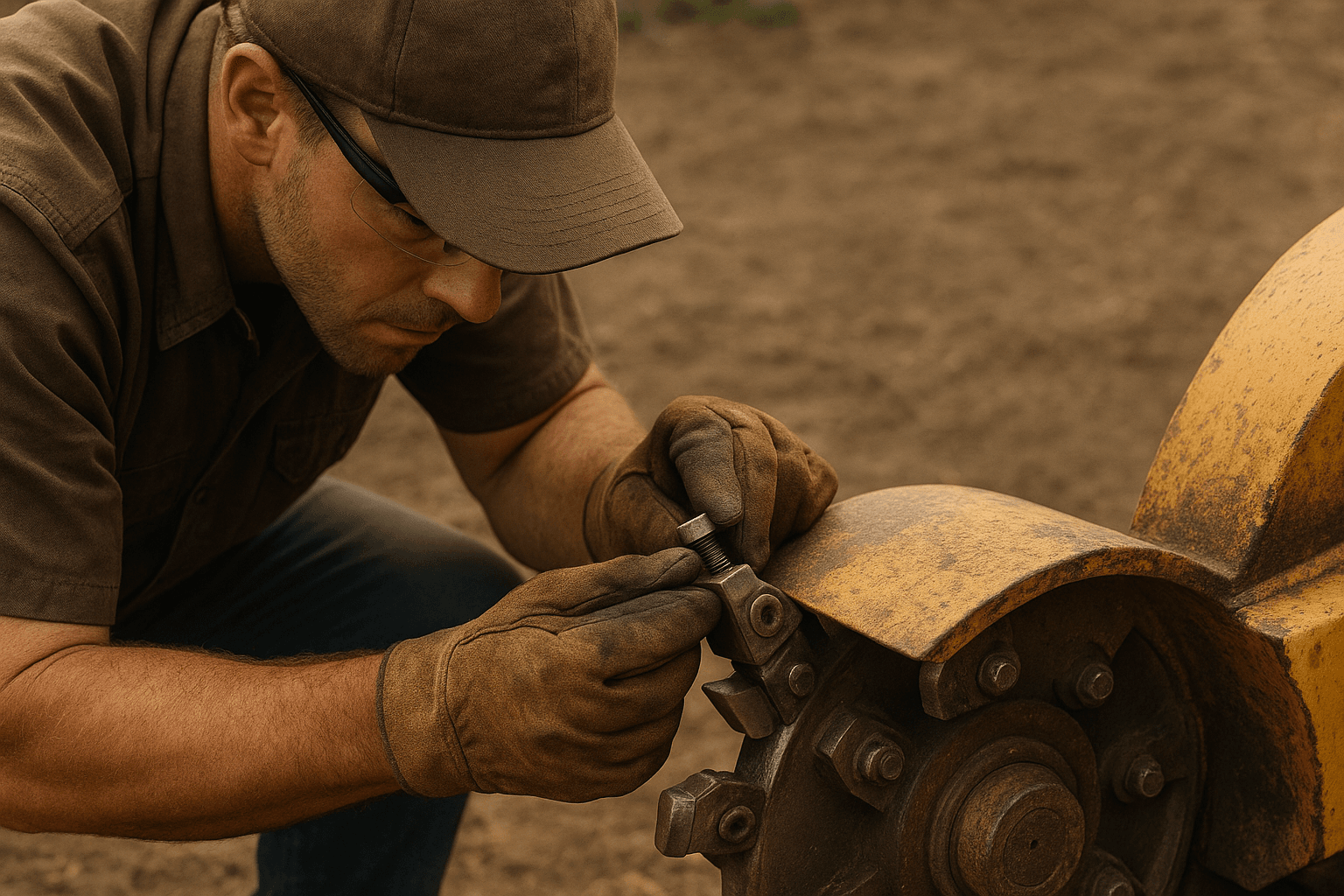
When you operate a stump grinder, whether every day or only occasionally, you quickly realize how much the entire job depends on the condition of the teeth. They determine how smoothly the grinder cuts, how long each task takes, and how much strain the machine endures. Yet teeth are often overlooked until performance drops, fuel consumption rises, or the machine starts to vibrate more than usual. In many cases, what appears to be a mechanical issue is simply the result of worn or low-quality teeth.
The truth is straightforward: the quality of your teeth and the consistency of your maintenance routine have more influence on productivity and operating costs than most people expect. Better teeth don’t just cut cleaner; they protect your engine, reduce stress on bearings, and help keep labor and fuel costs predictable. Understanding how to care for them, along with choosing the right ones, can transform the way you work on every stump.
1. Why Teeth Matter More Than They Seem
Teeth endure the harshest conditions of the entire grinding process. They meet wood, dirt, roots, rock, moisture, and heat all in the same rotation. The result is inevitable wear, but the speed and pattern of that wear affect everything else around it. When a tooth loses its edge, the grinder must work harder to remove the same amount of material. Jobs take longer. The machine vibrates excessively. Fuel usage climbs. Operators fatigue more quickly. Even the engine and bearings begin to experience unnecessary stress.
Many people assume this is just “part of the job,” but often the real cause is simply poor-quality teeth or teeth that have not been maintained regularly. Cost-cutting on critical components typically leads to higher operational costs later on. Stump grinder teeth follow the same logic: a low upfront price rarely reflects the real cost of ownership.
2. Cost Per Hour: The Most Accurate Way to Compare Grinder Teeth
A frequent question in the field is whether premium teeth are worth the higher price. Instead of focusing on the purchase cost, it’s far more useful to consider how much each tooth costs per hour of actual grinding. Low-cost teeth may look appealing at checkout, but they usually dull quickly, lose efficiency after only a few hours, and consume more fuel. By contrast, high-quality teeth tend to last far longer, maintain a consistent cutting profile, and place less strain on the grinder.
Consider the numbers used by many operators across the industry: inexpensive teeth that cost just a few dollars often last only three or four hours in real-world conditions. When you divide the price by the lifespan, the cost per hour becomes surprisingly high. Premium teeth, which may cost more initially, frequently last two or three times as long and perform reliably throughout their lifespan. Their cost per hour ends up lower, their cutting efficiency higher, and the wear on your machine noticeably reduced.
This is why many contractors now evaluate their components based on performance over time rather than sticker price. A growing number of industry discussions support this shift, including equipment-efficiency analyses such as Forbes’ article Unplanned Downtime Costs More Than You Think, which emphasizes how the real expense of a component lies in how it performs in the field—not in what it costs on the shelf. The smarter question is never “What do these teeth cost today?” but instead, “What will these teeth cost me to use?”
3. Practical Maintenance That Extends Tooth Lifespan
Even the best teeth require basic, consistent care. Fortunately, maintaining them doesn’t demand complicated procedures. What matters most is developing a simple routine and sticking to it. A quick inspection before each job helps detect rounded edges, cracks, heat discoloration, or slight misalignment—issues that, if ignored, tend to worsen rapidly and lead to downtime.
Sharpening is another key factor. Many operators delay sharpening until the teeth are clearly dull, but light, frequent sharpening helps maintain cutting power without removing excessive material. This approach is similar to preventive maintenance models discussed by Gartner: early, small adjustments protect long-term performance and reduce the need for larger interventions.
Keeping the pockets and wheel clean at the end of each shift also extends the life of your teeth. Dirt and debris create uneven pressure and unnecessary vibration, which accelerates wear. A few minutes spent on cleaning can save hours of reduced efficiency later. Finally, tracking approximate working hours for each set of teeth gives you a clear picture of their lifespan and helps you plan replacements before performance drops sharply. Many of the most efficient crews use nothing more than a notebook or a phone note to keep a simple record, and the payoff is significant.
4. Why Some Teeth Outperform Others
Not all stump grinder teeth are created equal, and the difference between average and high-end components becomes obvious once you understand what goes into them. Professional-grade teeth often use denser, more durable carbide, combined with precise brazing and engineering that allows the tooth to hold its shape under stress. This means they cut more efficiently, heat up less, resist fractures better, and maintain their edge through tougher conditions.
Research from the U.S. Forest Service has consistently shown that advanced carbide tools perform better in abrasive or rocky environments, and that their stability under load helps extend machine life. In practice, operators notice that premium teeth allow the grinder to work steadily without requiring constant correction or extra passes. With less strain on both the machine and the operator, fuel usage drops and job times become more predictable. It becomes easier to estimate schedules, maintain equipment health, and ensure consistent job quality.
5. Why StumpTeeth Stands Out
While many general suppliers offer stump grinder teeth, very few specialize exclusively in this category. StumpTeeth was built on a different model: focus only on the components that matter most to grinder performance. This specialization allows for more rigorous material selection, targeted design improvements, and reliable consistency across all product lines. Instead of offering a little bit of everything, StumpTeeth concentrates entirely on providing teeth engineered for durability, precision, and long-term performance.
Reports from McKinsey on vertical specialization highlight how companies that narrow their focus often deliver better reliability and customer satisfaction than generalist suppliers. StumpTeeth follows this principle closely by testing materials directly in field conditions, optimizing carbide formulations, and ensuring compatibility with nearly every mainstream grinder on the market. For contractors and individual operators, this means less guesswork and more confidence in the parts they rely on each day.
6. The Cost of Waiting: Why Delaying Maintenance Reduces Profitability
In many operations, worn or low-quality teeth remain on machines simply because they “still work.” But every hour spent grinding with teeth that have lost efficiency costs more than it appears. Jobs take longer, fuel bills increase, and equipment endures heightened stress. Productivity declines quietly, often going unnoticed until margins tighten and the overall cost of running the business starts to rise.
Margins within the U.S. tree-service sector are narrowing, making equipment efficiency more important than ever. For many operators, the fastest way to recover those margins is not by working more hours or buying new machinery, but by improving the parts that directly influence performance; starting with the teeth. Replacing or maintaining them on time is one of the simplest ways to reduce daily costs and protect the life of your grinder.
Better Teeth Mean Better Work
Stump grinder teeth shape every part of the job: the speed of the cut, the smoothness of the operation, the longevity of the grinder, the amount of fuel you burn, and the consistency of your results. They may seem like small components, but their influence runs through your entire workflow. By choosing high-quality teeth, maintaining them regularly, and paying attention to cost per hour rather than upfront price alone, you set yourself up for faster jobs, lower operational costs, and far fewer headaches.
And this is where StumpTeeth can truly help. With specialized engineering, dependable performance, and fast delivery options, the right parts can transform your daily operations.
Ready to Perform Better?
Fast delivery is guaranteed: orders placed by 2 pm CT ship the same day, with next-day options available. Whether you’re a professional contractor managing a full schedule or an individual operator working on occasional jobs, keeping your grinder in top condition always begins with choosing the right teeth.
Explore the full selection at StumpTeeth.com, where you’ll find high-performance options designed to help your grinder run like new. And if you have questions or need assistance selecting the most suitable teeth for your machine, our team is ready to help.Call us directly at (512) 500-0075, or contact us online for expert support and guidance.